GDPR compliance and ITSM tools — Overview and practical guide
The General Data Protection Regulation or GDPR is an EU (European Union) law that dictates how organizations can collect, store, and process EU residents’ personal data. This article breaks down how GDPR relates to ITSM and key IT processes, as well as how ITSM tools can help your team stay on top of GDPR.
IT service desks regularly handle and store large amounts of personal data — in service desk tickets or in user management systems, for example — so teams need to make sure they’re following GDPR to avoid penalties like fines. And since ITSM (IT Service Management) tools are essentially data processing systems, GDPR compliance is also a key consideration when selecting an ITSM vendor. Let’s dive in.
Who is this guide for:
- IT Managers
- Service desk leaders
- IT Operations Managers
When to use this guide:
Use the approach outlined in this article when:
- you want to get an overview of what GDPR is and how it relates to ITSM and ITSM tools.
- you’re searching for and comparing different ITSM tools, and you want to identify features of ITSM tools that support GDPR compliance.
GDPR and ITSM takeaways:
GDPR applies to IT operations directly (not just legal teams). This is because IT teams routinely handle personal data in things like service desk tickets, logs, and asset and user management systems.
Data residency and data sovereignty impact compliance. Where your data is stored isn't the whole picture — you also need to know which laws govern it and who could legally access it.
Your ITSM tool needs to support GDPR processes. Think of access requests, correction, and deletion (“right to be forgotten”).
IT teams need to report and handle personal data breaches within 72 hours, and your ITSM tool should be able to support this via Incident Management.
IT teams have to demonstrate compliance. Your ITSM tool needs to support you in maintaining logs and audit trails and documenting compliance-related processes, so you’re always audit-ready.
Using an ITSM vendor doesn’t transfer liability. Even if you use an ITSM vendor, your IT team is still responsible for how personal data is handled.
Your ITSM processes need to be designed with “privacy by design” in mind. This looks like role-based access (RBAC) by default, ITSM processes designed with GDPR in mind, and secure configurations.
What is GDPR, and how does it relate to ITSM?
The General Data Protection Regulation is an EU law that came into effect on May 25, 2018. GDPR is designed to protect EU residents’ privacy and personal data by regulating how it’s handled and stored by organizations.
Let’s be clear: GDPR isn’t just an issue for your legal team. In fact, the rules laid out by GDPR apply directly to IT and service teams.
According to GDPR, personal data is defined as any information “relating to an identified or identifiable natural person”. A customer’s full name and email address that’s part of a simple password reset ticket? Personal data.
Because so much personal data is constantly flowing through IT service desks, IT teams often act as both data “controllers” (the party that defines how data is processed) and “processors” (the party that actually processes the data) under GDPR.
GDPR isn’t just a compliance check-box, either. The regulation requires organizations to follow a principle known as “privacy by design”, meaning your IT team needs to keep data protection in mind when setting up core ITSM processes like Incident Management, Change Management, and IT Asset Management.
Which GDPR principles impact IT operations?
GDPR principles aren’t just theoretical. Here are just a few of the key elements that impact daily IT operations, and what they mean for your team:
-
- Transparency. Your service team needs to clearly explain and demonstrate how personal data is collected, stored, and used.
- Right to access. Data subjects (i.e, your service desk’s customers) can request access to the personal data you hold about them.
- Right to be forgotten. Your customers can ask your service desk to delete their personal data, unless there’s a valid reason to keep it.
- Right to rectification. Your customers can ask you to correct inaccurate personal data.
- Right to object. Your customers can object to their personal data being processed.
- Breach notification obligations. If personal data is involved in a breach, your service desk needs to report it within 72 hours.
- Privacy by design. You need to build data protection into your IT systems and processes from the beginning, rather than treating it as an afterthought.
How do we align ITSM processes with GDPR?
Here’s a quick breakdown of how GDPR principles fit into a few key ITSM processes:
Incident Management
GDPR requires organizations to detect, report, and address personal data breaches within 72 hours. That’s a pretty tight window. Your IT team needs Incident Management processes in place that can support this turnaround.
Request Management
Setting up workflows for data deletion and disclosure makes it easier to respond quickly to your customers’ “right to be forgotten” or data subject requests.
Configuration Management
Configuration Management can help your IT team identify any assets and IT services that store, process, or handle personal data — and map how that data flows across different services.
IT Change Management
Building GDPR principles into your IT Change Management processes means that you’re less likely to accidentally expose, leak, or improperly handle personal data during a change process.
Why does GDPR matter in ITSM tool selection?
Because ITSM tools store and process personal data, choosing an ITSM tool is a compliance decision, as well as a tech decision.
Organizations that don’t comply with GDPR face serious penalties, including fines of up to 20 million euros or 4% of total global annual turnover (whichever is higher). Legal and financial implications aside, failing to comply can also hurt your organization’s reputation and damage trust. So, you need to keep GDPR top-of-mind when you’re comparing solutions.
When selecting an ITSM tool, it’s also worth remembering that using an ITSM vendor doesn’t transfer liability. In other words, it’s up to your IT team to make sure that you’re choosing a GDPR-compliant vendor who will handle your customers' and employees’ personal data securely.
GDPR isn’t the only regulation that your IT team needs to be on top of. Directives like NIS2 are raising the bar even higher. Check out our guide to staying NIS2-compliant.
What are the benefits of aligning GDPR and ITSM?
As well as helping you avoid penalties, integrating GDPR principles into your ITSM processes and ITSM solution has several advantages:
Stronger data security
GDPR principles are heavily focused on handling and storing data securely. So, selecting a tool designed with GDPR compliance in mind makes your organization less susceptible to data breaches. And, if a breach does happen, you’ll be better prepared to handle it and minimize the fallout.
Quicker responses to security incidents and data breaches
Since GDPR calls for a 72-hour turnaround when detecting and responding to a personal data breach, your incident and breach management workflows will be set up for fast responses.
Fewer repetitive tasks, more strategic work. ITSM tools can support your team by automating routine GDPR-related tasks, such as handling data subject requests or breach notifications, so team members can focus on more high-level strategy.
Audit-ready transparency. ITSM tools with audit trails and advanced reporting capabilities can help your IT team demonstrate compliance during audits or regulatory inquiries.
Which GDPR capabilities should an ITSM tool support?
So, what does GDPR compliance actually look like in an ITSM tool? Here are some key features to look out for when searching for an ITSM tool to support GDPR compliance in your organization:
Audit trails
Look for an ITSM tool with audit trails, where all personal data actions are logged. An audit trail shows exactly how personal data has been processed and who had access to it. This helps your team stay accountable and prove that your IT organization is following GDPR principles, for example, if you’re being audited or investigated by a regulator.
Reporting and dashboards
Reporting and dashboards can help you get a clear overview of how well your team is meeting GDPR requirements, for example, by tracking KPIs like incident resolution or personal data request response times.
Access control
Not every user should have access to everything. With access controls like role-based access (RBAC), you can be sure that only the right people have access to personal data.
RBAC also supports the GDPR principles of data minimization and privacy by design. Rather than granting broad access and restricting it later, RBAC limits access by default, which is exactly what GDPR requires. For example, a service desk agent should be able to resolve IT incidents, but they shouldn’t be able to see sensitive HR or legal tickets (unless explicitly authorized).
Want to get a deeper understanding of how access governance supports compliance? Check out our guide to managing admin consent requests.
Automation
Automation can help your IT team follow GDPR-related processes consistently and on time, without getting bogged down by slow, manual work. Let’s say a user submits a data deletion request. Your ITSM tool can make sure that it’s routed to the right team, with a deadline, so nothing gets missed.
Incident Management workflows
Look for an ITSM tool with Incident Management workflows in place to make sure incidents are identified and properly escalated within the required 72-hour window. Building automation into your Incident Management workflow can cut out unnecessary manual work and help your IT team respond to breaches faster.
How do we select the right vendor for GDPR compliance?
Since using an ITSM tool doesn’t transfer liability, it’s up to your IT organization to choose a GDPR-compliant vendor. Here’s what to look out for:
A mature approach to GDPR and data security
Does the vendor have a Data Processing Agreement (DPA) available? Do they have security certifications like ISO/IEC 27001? And do they clearly outline roles (e.g., data processor, data controller)? These are all good signs.
Data sovereignty and residency
When choosing an ITSM vendor, you’ve got to consider where and under which jurisdiction your data will be processed.
First, some key terms:
- Data residency = the location where your data is physically stored.
- Data sovereignty refers to the legal system that governs your data.
When it comes to data residency, keeping data in the EU makes compliance more straightforward (and many organizations actually cite EU residency as a baseline requirement).
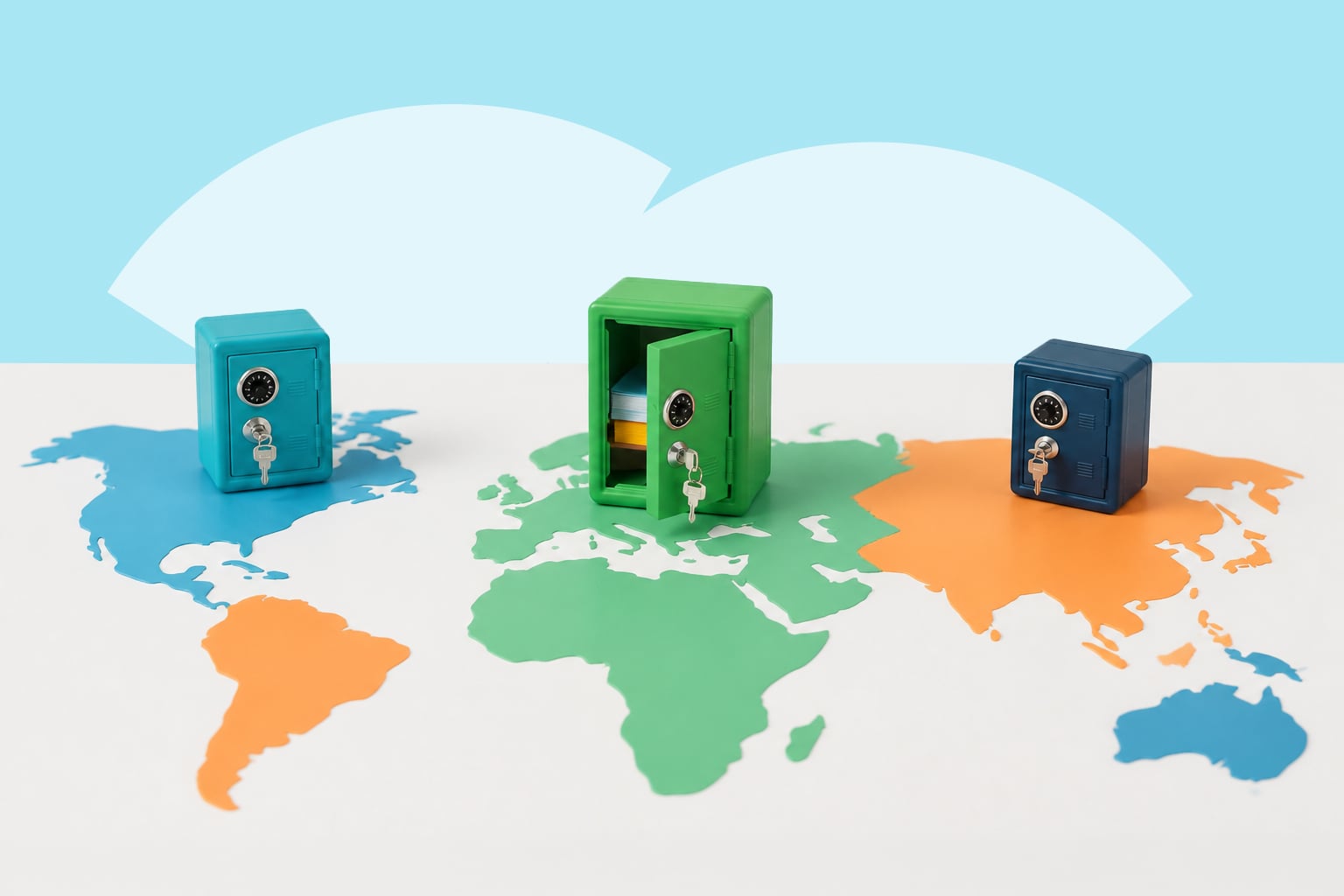
But knowing where your data is located isn’t enough. This is where data sovereignty comes in. Even if your data is stored in the EU, a vendor based outside of the EU may still be subject to non-EU laws, and in some cases, even allow non-EU governments to access your data.
Take the US CLOUD Act, for example. This law allows US authorities to compel US-based companies to hand over data stored anywhere in the world, including EU data centres. That means that, if your ITSM vendor is US-based, US authorities could legally request access to names, email addresses, job titles, or device details belonging to any user who ever raised a ticket across your entire organization. And even if your IT organization had no choice in the disclosure, regulators might still ask why you chose a vendor that put you in that position in the first place.
When selecting an ITSM vendor, data sovereignty needs to be on your evaluation checklist alongside price, features, and support. Understanding both where your data is stored and which laws it’s subject to is the only way to make a genuinely informed decision.
ITSM tools and GDPR: Evaluation checklist
Use this GDPR checklist when evaluating an ITSM tool for GDPR compliance:
- Can the tool help us handle user data requests (like access or deletion) quickly?
- Can the tool help us prove compliance during an audit?
- Does the tool enforce role-based access control and least privilege?
- Can the tool help you detect, track, and report a data breach within 72 hours?
- Can the vendor demonstrate lawful data processing?
- Does the tool make it easy to follow GDPR rules as part of our normal IT processes?
- Can the tool scale compliance as our organization grows?
- Where will our data be stored and processed?
Common questions about GDPR and ITSM
Does GDPR apply to ITSM tools?
Yes. ITSM tools often store and process personal data like names and email addresses, so they fall under the scope of the General Data Protection Regulation.
What kind of personal data is stored in ITSM tools?
ITSM tools usually store information like names, email addresses, and device details. They may also contain sensitive information in tickets, logs, or attachments. Even technical data like IP addresses can count as personal data.
How do ITSM tools help with GDPR compliance?
An ITSM tool helps by structuring and automating compliance-related processes, such as managing data subject requests, tracking incidents, maintaining audit logs, and enforcing workflows and deadlines.
What are the biggest GDPR risks in ITSM environments?
Common GDPR risks for IT service teams include too many users having access to data, not having an overview of stored data, and missed deadlines, for instance, when responding to data breaches. Teams that rely on manual processes are more likely to encounter these risks.
Final thoughts on GDPR and ITSM tools
GDPR isn’t just a consideration for legal teams. IT teams need to be aware of and maintain GDPR compliance in their day-to-day operations by building GDPR principles into their ITSM workflows, and choosing ITSM tools that support GDPR processes, like data subject requests and responding to data breaches.
Want to help your IT team stay compliant but have no clue where to start? Start by defining your organization’s GDPR requirements for an ITSM tool upfront. Focus on must-have functionality like Incident Management, audit trails, role-based access, and EU data residency. This will help you quickly narrow down vendors and choose a tool that supports compliance from day one.
Time to switch to an ITSM tool that makes sense for your team?
Our guide gives you everything you need to know about evaluating and selecting your perfect ITSM solution.
Inspire others, share this blog